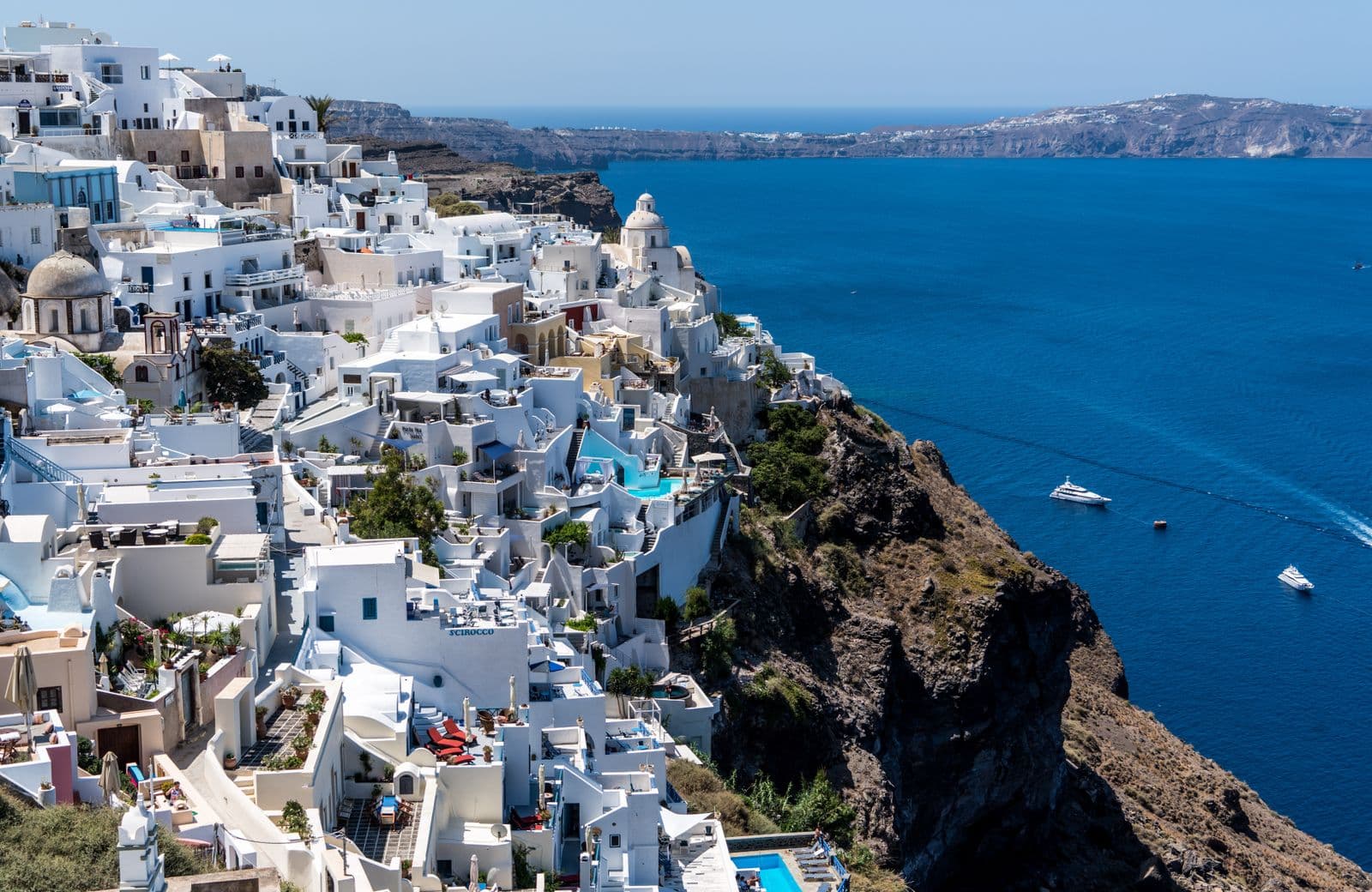
Greece is the widest sailing playground in the Mediterranean, and the trick is knowing that it is not one area but several. The Ionian, on the west coast, is green, sheltered and gentle — short hops between Lefkada, Meganisi, Ithaca and Kefalonia, with reliable afternoon breezes and calm mornings. The Saronic Gulf, an hour from Athens, packs Aegina, Poros, Hydra and Ermioni into a compact loop that works even for a long weekend. The Cyclades — Paros, Naxos, Ios, Santorini — are the postcard Greece of white villages and windmills, but they sit in open water and demand more from a crew. The Dodecanese, from Kos to Rhodes, mix Greek islands with views of the Turkish coast.
That variety means Greece suits almost everyone: first-timers and families are at home in the Ionian or Saronic, while experienced crews chase the wind in the Cyclades. Distances between anchorages are typically 15–25 nautical miles — a relaxed half-day sail with time to swim before dinner.
Ashore, the rhythm is half the holiday: morning coffee at the harbour, a swim stop in a deserted bay, and an evening mooring stern-to on a village quay, steps from the taverna. Provisioning is easy on all but the smallest islands, and mooring on town quays is often free or nearly so.
Sailing conditions
In July and August the meltemi — a dry northerly — blows across the Aegean at force 4–6, sometimes more, which makes the Cyclades exhilarating for experienced sailors and hard work for beginners. The Ionian sees no meltemi: mornings are calm and a friendly north-westerly (the maistro) fills in most afternoons at force 2–4, fading at sunset. Tides are negligible everywhere; the main planning factor is wind, not current.
Key marinas & bases
- Alimos Marina (Athens) — the Med's largest charter base
- Lefkas Marina (Lefkada)
- Gouvia Marina (Corfu)
- Kos Marina (Dodecanese)
- Lavrion Port (Cape Sounion)
Best time to go
| Period | What to expect |
|---|---|
| May – mid-June | Warm, quiet, seas still cool. Good prices, empty anchorages. Ideal for the Ionian and Saronic. |
| Late June – August | Peak season. Hot, busy, meltemi at its strongest in the Aegean. Book berths and boats early. |
| September – early October | The insider's pick: warm sea, softer winds, thinner crowds, better prices. |
| November – April | Off-season. Many fleets winterise; only for experienced crews with flexible plans. |
Three routes we recommend
Saronic loop from Athens
Alimos → Aegina → Poros → Hydra → Ermioni → Epidavros → Alimos. Short legs, protected water, car-free Hydra as the highlight — the classic first Greek charter.
Ionian island-hop from Lefkada
Lefkas → Meganisi → Kastos → Ithaca → Kefalonia (Fiskardo) → Sivota → Lefkas. Green islands, gentle afternoon breezes and the Med's most forgiving sailing.
Cyclades classic from Paros
Paros → Naxos → Koufonisia → Ios → Santorini → Sifnos → Paros. Open-water legs and meltemi sailing — best in September with an experienced crew or skipper.
Frequently asked
Is Greece good for beginners?
When does the meltemi blow?
Do I need to book marina berths in advance?
Ready to sail here?
See every available boat in this area at official fleet prices — or tell us your dates and we'll shortlist for you.